Essay Influencer Tech Category Trends
Social Commerce Features Built Into Influencer Platforms
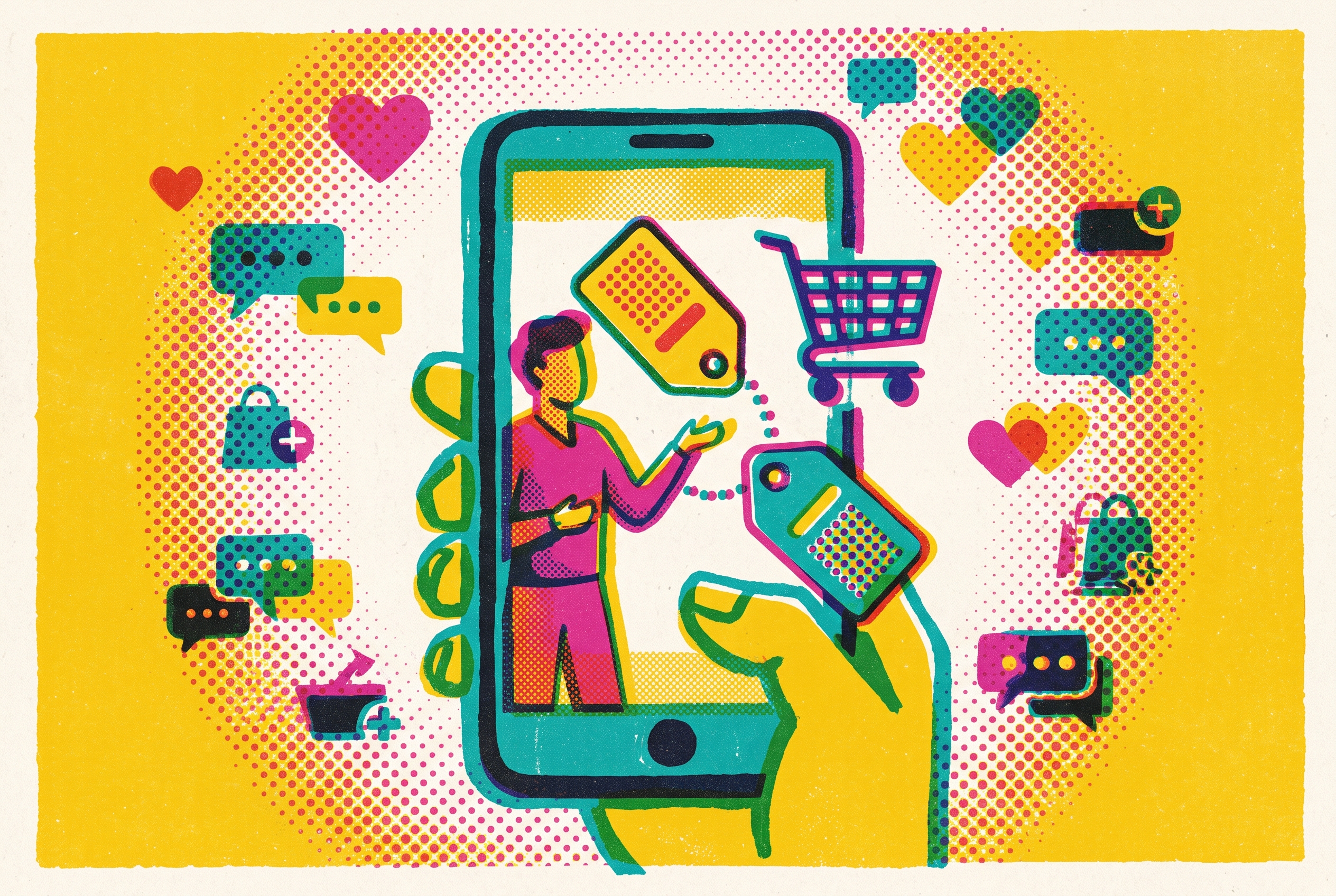
Influencer platforms now let creators sell products directly to shoppers without leaving the app.
Influencer platforms are no longer just matchmaking tools that bring a brand and a creator together and then get out of the way. They now work as commerce infrastructure, where the transaction is part of the content itself instead of being handed over to an outside retailer's site. The old funnel, where an ad sent people to a landing page, then a cart, then checkout, now happens all at once inside the app. The buy button is right there when someone first finds the product, not a few steps downstream.
The 2026 overview from BigCommerce relies on this precise boundary to distinguish social commerce from social media marketing. Under the former, buyers complete transactions entirely on-site, whereas the latter merely redirects them to an external shop. Four feature classes have shown up to make buying inside the platform work, and each one tackles a distinct part of the challenge. With in-app checkout, every step of the purchase stays within the application itself.
Each category works by different mechanics, so excelling at one does not mean a platform excels at the others. In social commerce, interest is sparked by browsing and creator-led ideas. Shoppers may have no intent to buy before a creator brings an item to their attention. That first spark guides how all four features should be built and sets the framework for what follows.
Shoppable links and product tagging
The whole stack starts with product tagging. Once the creator links the item featured in a post, shoppers can see its details or move into checkout in-app, keeping the path between discovery and buying unbroken.
Sprout Social's 2026 influencer marketing trends report counts this integration among the defining structural shifts, showing how creator videos now function as what it labels "direct storefronts with no friction" on platforms like TikTok Shop and YouTube Shopping.
The tool has become much more widely available too. In March 2026, YouTube sharply reduced the subscriber requirement for Shopping affiliates, letting smaller creators start tagging products for the first time. By adding Amazon to the Shopping affiliate program, YouTube lets qualifying creators collect commissions from Amazon affiliate link sales while giving them more products to feature without making them learn another tool.
For brands, this means a single creator post can do two things at the same time. Such posts still drive organic visibility like traditional influencer work, yet they also close purchases directly without requiring extra ad spend or a dedicated commerce asset. That is why product tagging acts as the base supporting those remaining three feature categories.
Affiliate tracking as a measurable revenue channel
Product tagging directs shoppers to the item. With affiliate tracking, brands can identify the creator who led the shopper to the product, giving finance teams the proof they need to fund influencer marketing without leaving results to guesswork. When payouts are based on purchases completed inside the platform, brands no longer have to infer results from promo-code or UTM link approximations because the sale and seller are both recorded.
TikTok Shop presents the choice as three ways to run affiliate selling. Each tier gives the brand a different level of control over who can sell for it, so choosing among them really means deciding how much creator vetting the brand wants to do upfront against the size of the audience it hopes to reach right away.
In this system, the loop also shapes creator behavior.
Apart from native platforms, a distinct group emerged to tackle the same challenge by building its own commerce and affiliate infrastructure. Launched under the rewardStyle name in 2011 with its LIKEtoKnow.it tool for fashion bloggers, LTK has since evolved into an independent commerce ecosystem serving hundreds of thousands of influencers plus tens of millions of shoppers each month through its own mobile storefront. After purchasing Later in 2022 and changing its name, Mavrck grew further by absorbing Mavely in 2025, now processing billions of dollars each year in gross merchandise value via creator-led commerce. In its 2026 platform guide, Dash Social groups LTK alongside Aspire and Later under the label "affiliate and commerce networks," setting them apart from SaaS campaign-management platforms since such ecosystems equip influencers with shoppable links plus promo codes plus sales tracking rather than merely coordinating outreach and reporting.
The resulting brand decision centers on attribution integrity. TikTok Shop plus YouTube Shopping's affiliate feature keep tracking native to the platform, so attribution stays contained within a single ecosystem. Third-party networks such as LTK, Aspire, and Later monitor transactions spanning several channels, offering a brand flexibility no single native system can match, though this multi-channel scope operates via redirect links, which bring back part of the friction native checkout was designed to eliminate.
Live shopping and the compressed sales cycle
Going live to sell pushes a creator further than a tagged post, since it trades idle scrolling for real-time hustling to convert viewers. The same creator, now live, can tackle a concern the second it comes up, put a product to work rather than talk around it, and create a rush tied to a brief opening, collapsing the back-and-forth a buyer might otherwise stretch across multiple visits into one go.
In practice, hosts attach labeled merchandise to the live feed as it airs, letting shoppers tap for details or add items directly to their carts while still watching. The transaction completes on the same platform where the broadcast is happening. Brief static visuals or short videos rarely eliminate the hesitation needed to close a sale, whereas extended real-time showcases frequently succeed.
Since payouts adjust live as the stream unfolds, creator incentives tighten inside this format. This gives hosts an immediate monetary motive to resolve doubts and guide the audience to purchase while still live. In 2024, TikTok introduced GMV Max, requiring its use by July 2025. The platform has since merged shoppable clips and live streams into a single AI-driven ad framework that routes spending toward the creators and formats producing the highest gross merchandise value in real time. Such architecture reveals how automated spending and live commerce now share one unified foundation instead of forcing marketers to manage them independently.
Live shopping also demands more from the brand behind it. Brands prepared to actively manage that coordination usually gain more from the format than those seeking a hands-off commerce channel.
Each category works by different mechanics, so excelling at one does not mean a platform excels at the others.
In-app checkout and the last gap to purchase
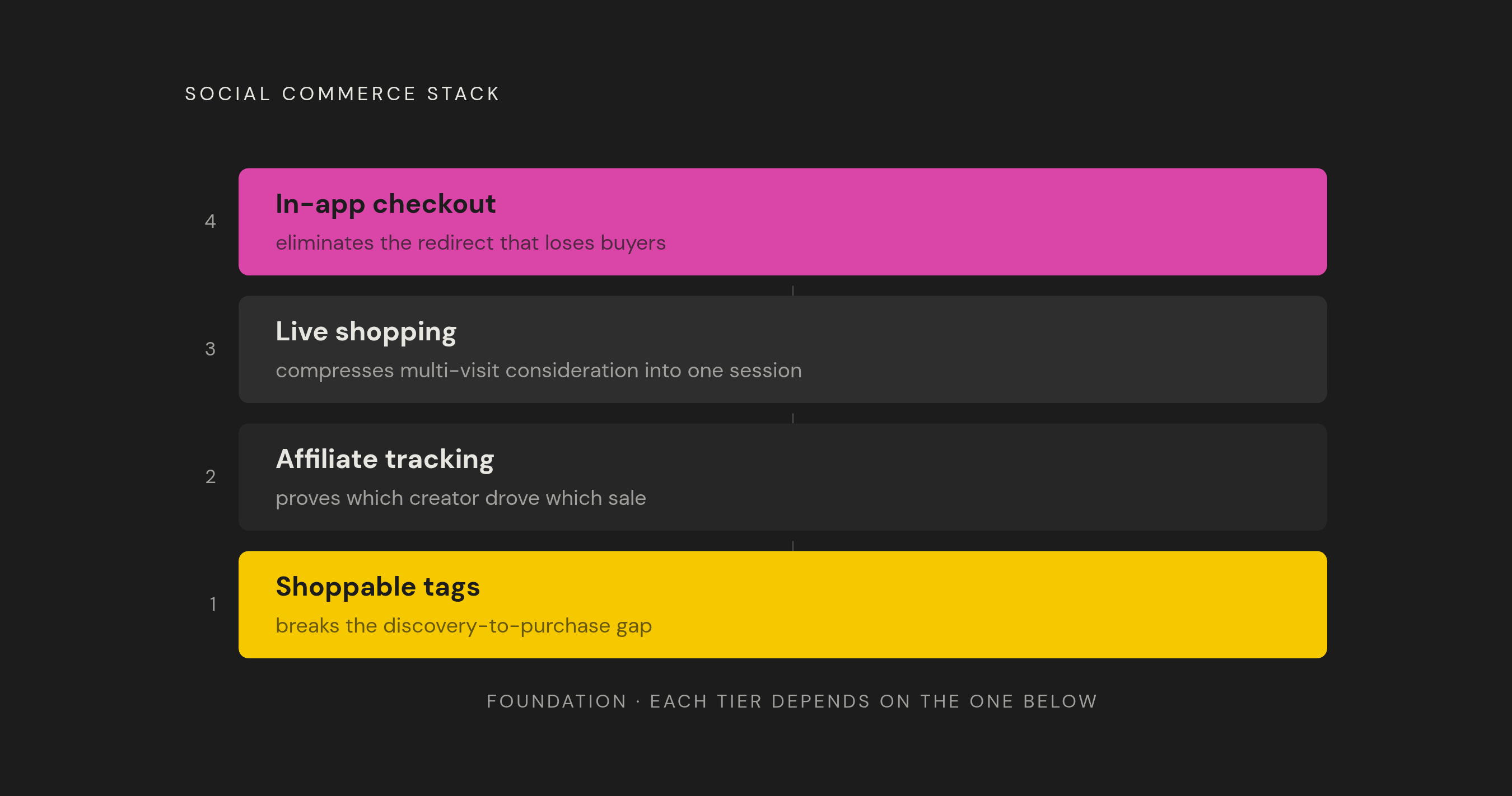
All of it becomes worthwhile only after in-app checkout is in place. Without it, shoppable tags and partner links continue to route shoppers through a browser handoff, costing you a substantial portion of customers who drop off prior to purchase completion. Every added click from first touch to final payment gives buyers another opening to walk away.
That handoff carries a real price. Following that debut, monthly GMV in the U.S. climbed steeply over the subsequent years. TikTok Shop processed worldwide GMV reaching into the tens of billions during 2024, and projections point to that sum nearly doubling by 2025. By 2026, EMARKETER expects TikTok Shop to outpace major U.S. retailers individually, including Target, Best Buy, Kroger, and Costco, in domestic ecommerce revenue.
Instagram’s return has taken a more winding route. After pausing the feature from 2022 to 2025, the platform revived creator affiliate commerce across 2025 and 2026, again giving creators in-app ways to sell after three years of creator commerce inactivity. With the comeback, Instagram is again squaring off against ShopMy and LTK, rivals that strengthened their footing while it sat out the creator commerce market.
Native checkout also moves the platform into a fresh role within the transaction. Once a platform runs checkout itself, it can weave in recommendations and similar-item prompts, adding other purchase nudges while stepping into the creator-customer relationship just as the sale is made. For brands, the bargain is clear: checkout tools that make buying easier also let the platform occupy space in what was once a direct creator-buyer relationship.
Checkout support also differs depending on the platform and market. Because Instagram and Facebook limit checkout by geography and merchant qualification, any brand assessing them for a target market should verify whether shoppers can complete the purchase inside the app or are instead sent through a redirect styled as checkout.
AI and fraud risk in feature valuation
In-app checkout, live shopping, affiliate tracking, and shoppable tags only deliver value based on how authentic the audience is behind the creator using them. Since creators receive a cut of each purchase linked to their content, native checkout directly links financial reward to audience size. Padded follower counts built from bots or fabricated accounts therefore skew a company's return calculations far beyond mere image damage.
Sprout Social's 2026 analysis positions the move toward paying creators based on results, where compensation depends on sales and ROI instead of audience size, as a direct answer here: brands must be able to distinguish creators who genuinely drive purchases from those who only appear large. That shift itself demonstrates the weight the industry gives to the divide between apparent reach and genuine influence.
Industry talk overstates how precisely the extent of fraud can be measured. One 2026 review reported that publicly available vendor materials did not substantiate the fraud-rate numbers commonly associated with leading influencer analytics companies. Fraud remains a genuine structural exposure, yet many headline percentages attached to the issue cannot be checked from the claims available. When assessing a platform or creator list, brands should factor fraud into commerce decisions as a built-in structural risk rather than present it as a set figure for a pitch deck.
That challenge is one reason platforms are adding AI tools straight into the commerce stack. TikTok's Symphony is pitched to marketers, partners, and talent as a smoother way to make videos suited to TikTok-first viewing, combining automated ad-building with creative features shaped for the app's native style. As noted above in the live-shopping context, GMV Max relies on that AI backbone to steer ad spend throughout the commerce stack moment by moment, moving money toward what is actually converting instead of what only looks good in a plan. For a brand, the takeaway is to scrutinize whether creators are genuine and tracking is trustworthy just as closely as the commerce features. A buying link in front of a smaller, real audience will drive better results than that same link placed with a padded following, even when the larger numbers look stronger in media materials.
Matching a platform's commerce feature set to a brand's conversion goals
Picking between these platforms means first naming the exact friction a brand wants to take away, since the four feature classes each fix distinct issues and excelling in one area guarantees no advantage elsewhere. For visually appealing items requiring minimal explanation, shoppable tags deliver the bulk of the benefit, and YouTube has expanded that capability to more creators and catalogs over the past year by broadening affiliate access, onboarding fresh UK retail partners, and bringing Amazon into the program. Yet if the item demands showing rather than telling, like cosmetics, gadgets, or clothing where sizing is everything, live shopping's instant influence becomes essential, and companies must fund the logistical effort that format entails instead of assuming it costs less work than simply tagging an image.
Attribution works the same way. A brand seeking a single, self-contained account of which sale came from which creator should use TikTok Shop's built-in affiliate setup or the Shopping affiliate program on YouTube, since each follows the full journey within one ecosystem. A brand running creators on several platforms at once can get portability from networks like LTK, Later, or Aspire, though the trade-off is the clunky redirects those networks still rely on.
Phantom Farm belongs here as a decision engine for brands, connecting what they sell, who promotes it, and whom they want to reach with the commerce tools most likely to drive conversion rather than steering them toward the best-known platform. Brands weighing TikTok Shop checkout against Instagram's revived affiliate tools or an outside partner spanning multiple channels need to see which feature category best suits their products and how their audience buys. Phantom Farm handles that assessment, giving brands a better basis for selection than reputation alone.
Assess fraud and attribution risk within the broader platform review rather than apart from it. Tagging, affiliate links, live commerce, and built-in checkout depend on genuine audiences and attribution that can be trusted. Brands that choose platforms by pairing each capability with a real funnel bottleneck gain more from social commerce than those pursuing the platform with last quarter’s biggest GMV report.