Essay Influencer Tech Category Trends
AI-Powered Influencer Matching Technology Explained
Understanding the data layers behind AI matching tools helps marketers judge platform reliability.
AI-driven influencer tools don’t magically connect companies with creators. Figuring out how those layers actually operate, instead of accepting the output as trustworthy, separates a marketer capable of judging a platform from one trusting the software has answers they lack.
Why influencer matching at scale became a data problem
By 2025, the influencer marketing industry was worth $32.55 billion, up from 2024’s $24 billion and more than tripling over 2020 SQ Magazine InfluenceFlow. That kind of growth isn't only about more campaigns. That brings extra creators, platforms, and formats, plus a volume of work no marketing group could realistically follow manually. Through 2025, the creator market rose 35% annually as creators kept joining platforms, making manual cataloguing structurally not doable, beyond inconvenient InfluenceFlow InfluenceFlow.
Brands took notice. According to Influencer Marketing Hub, 78% of brands run automated creator discovery tools today, so the industry settled this through its workflows: a technical fix was required Influencer Marketing Hub 2026 Report.
Scale isn't the whole story. Follower totals and surface-level numbers quit being a reliable guide to fit or real authenticity years ago, so a creator with a big audience might be a bad pick or even fraudulent. Manual discovery became harder as the space grew. That breakdown is why AI matching had to grow into a layered, multi-stage setup instead of just a search field with filters.
Manual discovery: cost in time and missed signal
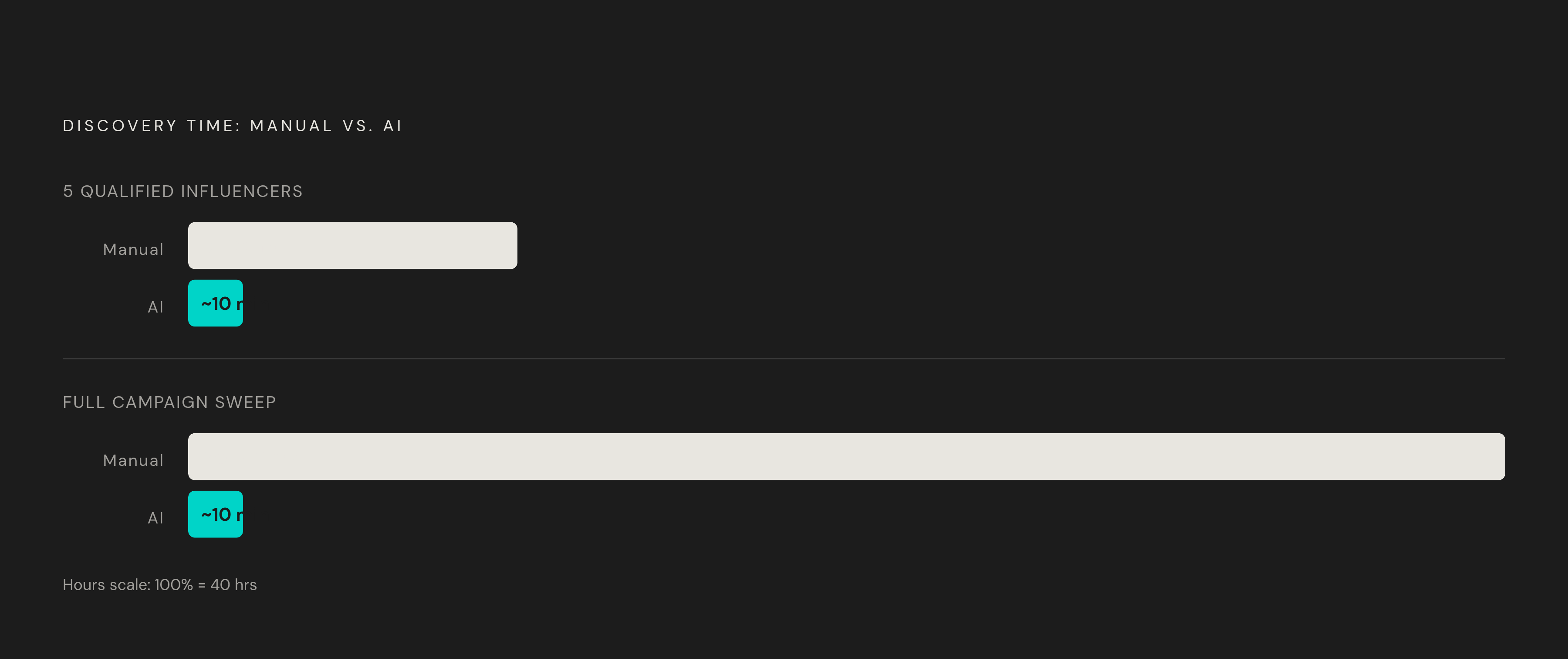
The numbers are brutal. Sourcing five qualified influencers manually requires 5 to 10 hours, while an entire campaign sweep takes 20 to 40 hours; AI tools finish a comparable run in roughly 10 minutes InfluenceFlow InfluenceFlow Archive. That difference by itself would justify a shift toward automated discovery, but that’s not actually the strongest case for it.
Manual review misses the more telling point. Manual review misses it all, even with days poured into browsing profile grids.
Years of picking creators relied on follower count as the selection criterion, since it was already visible on the profile. Marketers relied most on follower count, since it was the easiest clue available. AI matching does more than speed things up. Manual workflows routinely overlook the signals that truly drive how content lands, leaving teams to act on information that doesn't show the full picture.
Understanding what AI catches beyond a reviewer's reach means checking what these platforms actually process before making a recommendation.
The data ingestion layer: what AI systems read
Text signals cover captions, user remarks, and descriptions, parsed for themes, mood, and sentiment. Audience signals track demographics of followers, their interests, buying habits, and patterns, what vendors call "audience fingerprinting." Results signals cover engagement rate, follower growth velocity, ratios of comments to likes, and geographic spread. Historical signals cover earlier brand collaborations and how content did over the years, not just one lifetime average.
That distinction shifts how creators score, favoring recent work over lifetime totals. HypeAuditor's January 2026 shift to favor the latest 365 days instead of lifetime data shows how temporal weighting matters: someone who peaked years ago and kept coasting is fundamentally a worse bet than a creator gaining followers today, even when their lifetime averages match. With its 2026 YouTube integration, CreatorIQ brings first-party viewership data into discovery, so brands can evaluate who actually watches videos, not who once clicked subscribe and left.
Treating ingestion volume and data quality as identical is a frequent error. A platform with a huge database that rarely refreshes is arguably less useful than a more modest one that updates often, since stale data can produce confident-looking pairings that are quietly off. Modash's database, with 350 million creators across TikTok, YouTube, and Instagram, shows how much ingestion can handle; Upfluence takes another route, using current creator data across 12 million creators linked to commerce signals, favoring detail over breadth. Neither method is inherently right. Each one fits a different purpose.
How matching algorithms find structure in the data
After the data is ready, platforms usually turn to 3 algorithm categories.
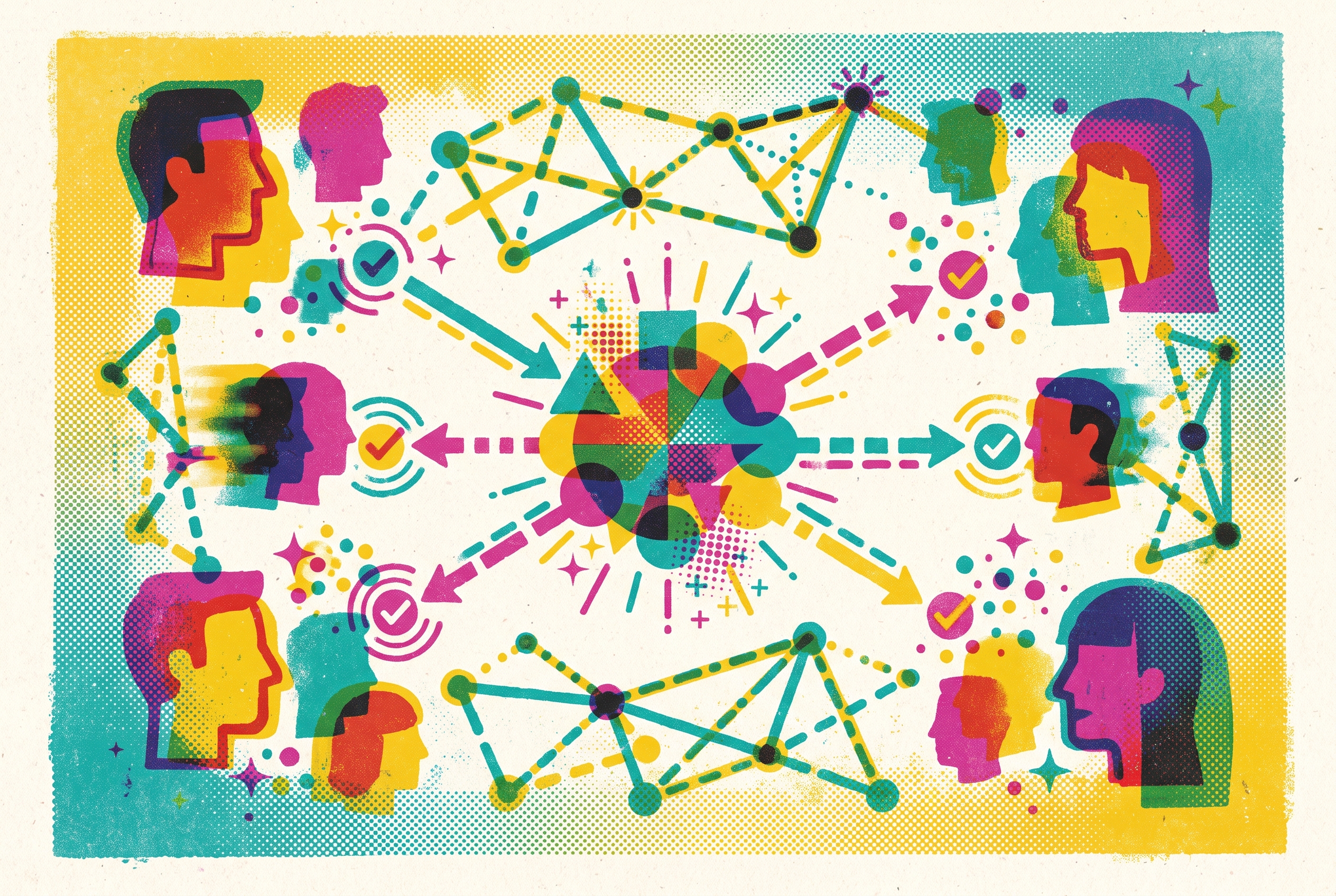
Like any recommendation engine, collaborative filtering draws on patterns from earlier collaborations: if Brand A did well with Creator X, a similar brand will see Creator X pop up as a match, since the model pulls from overall campaign data instead of judging the creator alone. Content-based filtering goes straight to what a creator keeps sharing, matching those clusters against a brand's category instead of needing years of partnership history first. Hybrid setups use both, and they usually do well since each approach covers the blind spots of the other. Content-based filtering can still evaluate a creator who just started and has no partnership history, whereas collaborative filtering would have zero data on them.
Some of this comes from real research traditions. A few platforms build on Gale-Shapley matching algorithm logic, updated by A.E, an economist. Roth, casting creator-brand pairing in formal matching terms, aiming for durable outcomes for both parties, not a ranked list favoring one brand. Initial models applied k-Nearest Neighbours to combined brand profile matrices and influencer data, Euclidean serving as the similarity metric, predicting fit through how near a creator's profile was to a brand's in that mathematical framework. Today's tools have moved far beyond that base, but knowing it remains helps show the reason industry "matching" is more rigorous than keyword search.
Running this many checks takes serious computing power. Using predictive algorithms, Linqia's platform chews through over 25 million influencer data points before outputting its ranked list.
A strong fit score can still flag the wrong spend if the audience is inflated or fake, so fraud detection isn't treated as something bolted on afterward, like a checkbox.
That breakdown is why AI matching had to grow into a layered, multi-stage setup instead of just a search field with filters.
Fraud detection as a built-in filter, not an afterthought
Follower counts are easy to fake for little money, and engagement pods on closed networks systematically distort the metrics matching algorithms need. Faking the numbers that once counted as proof of reach is baked in, making this a structural concern, not a fringe one.
The data makes this disconnect obvious. Influencer Marketing Hub's Benchmark Report shows that only a fraction of brands list brand safety, or compliance, as their main issue, while many have already encountered influencer fraud, pointing to widespread underestimation around how often this actually happens.
Tools made to find it track particular anomalies: sudden follower growth spikes that are inconsistent with how organic behavior works, comment-to-like ratios straying from expected ranges, geographic follower spread not fitting the posts and words used, plus engagement patterns appearing coordinated instead of real.
Platforms have gone about this in various ways. HypeAuditor scores creators on 35+ vetting metrics, anchored to an audience quality measure, treating fraud flagging as a core feature instead of an add-on. GRIN's Gia bakes authenticity checks into the discovery workflow, letting its agentic layer spot patterns across huge creator pools so nobody has to manually review a single profile. Upfluence flips things around by pulling existing customers into the creator pool, so audience-brand fit is already in place before fraud is even a concern.
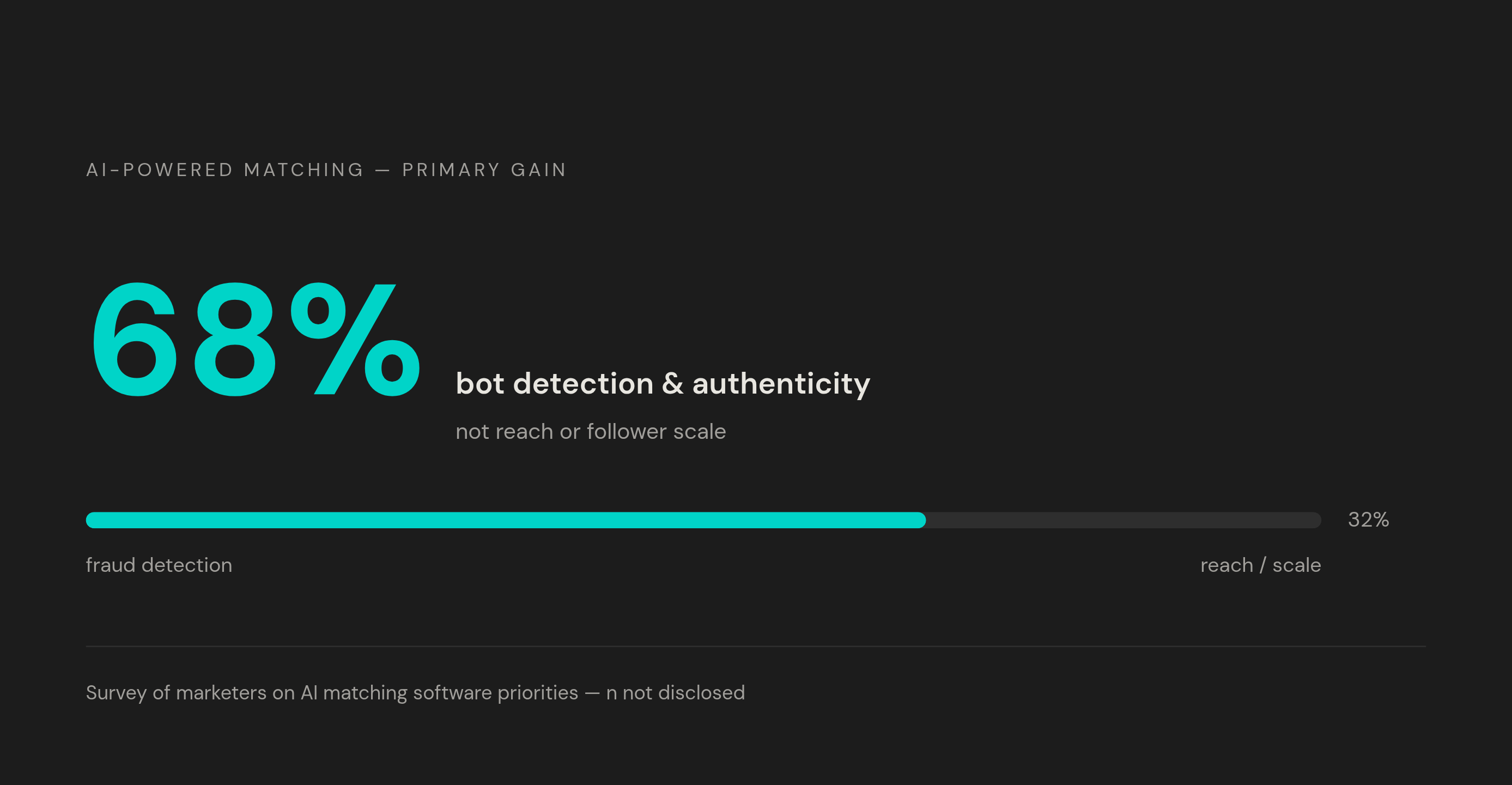
Marketers offer the clearest proof that fraud detection matters more here than reach or scale. Influencer Marketing Hub's Industry Report showed 68% of marketers crediting AI-powered matching's greatest gain to bot detection and authenticity verification, not to creators with larger followings Influencer Marketing Hub 2025 Industry Report. That statistic shifts the frame for the entire category: matching software justifies its budget by flagging fraud, not by chasing well-known creators.
Compatibility scoring: moving beyond follower count to measurable fit
After fraud screening clears real creators, the tool still needs to sort them for a particular brand and project using a few signals: quality of engagement rate (saves and comments per followers, weighted above sheer volume), loyalty of the audience (if followers interact again instead of once), conversion odds (how closely the audience profile of the creator resembles people who buy from the brand's store), sentiment in the audience (the mood driving those interactions, not just their count), plus brand affinity (behavioral signals showing people are already inclined toward the category of the brand).
Vendors present this in different ways. Sprout Social's Tagger platform surfaces the Brand Fit Score, an index that encodes various signals into one value a marketer can use right away. Cirqle's Echo AI parses historical datapoints at scale to suggest creator matches, showing how compatibility scoring now leans on accumulated campaign history instead of a fixed profile snapshot.
This movement toward engagement quality carries a clear, measurable result.
The downstream results support the approach. The scoring layer's report comes from those figures, showing what results when the layers actually function as designed. Sprout Social shows micro-influencers (10K–50K followers) get 4x higher engagement than mega-influencers, the implication AI scoring brings out when it favors engagement quality over audience size, which manual selection used to miss Sprout Social Research. Influencer Marketing Hub's Industry Report shows Brands see 3.7x better ROI with AI-powered matching report over manual selection, and Linqia's numbers confirm a 30% boost to ROI via AI-driven selection, both downstream proof the scoring layer does its job Influencer Marketing Hub 2025 Industry Report.
How real-time learning closes the feedback loop
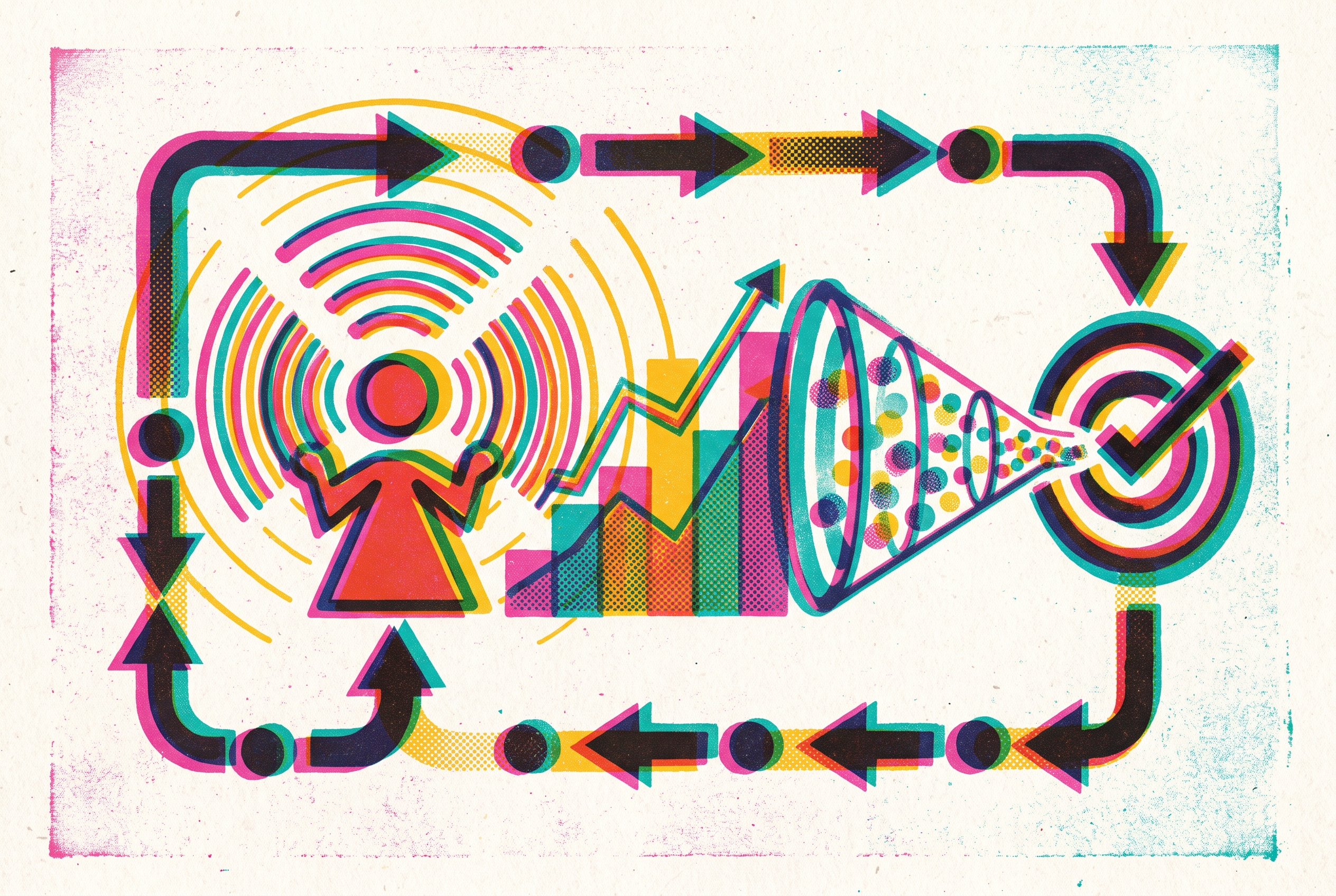
None of this happens just once. While campaigns are active, the models pull in real-time results: which posts sparked interaction, what creator and audience matches led to sales, and where early forecasts fell short. That feedback directly changes rankings, so a creator that outperformed what the model's expectation had been is weighted more for matching briefs, while one that underperformed is flagged for review.
Predictive modeling works on this loop. They forecast engagement and audience response before a campaign launches, getting more accurate as the algorithm accumulates outcome data over time. Viral Nation's CreatorOS platform puts this forecasting layer front-facing, built around talent work plus predictive attribution modeling, not as a quiet back-end layer.
Marketers see this as the leading edge of the category. Influencer Marketing Hub's 2026 Benchmark Report shows that among marketers surveyed, 26.89% named AI-driven creator matching their top 2026 priority, outranking every other way the industry applies AI.
This doesn’t take the place of judgment. Aspire's State of Influencer Marketing shows 59% of marketers turn to AI for discovery, analytics, and workflows, but Aspire treats it as an augmentation because matching a brand's tone, context, and creative fit with a creator is distinctly something people decide. AI can predict engagement. It can't decide for a brand if a creator's humor lines up with the brand's style, and that isn't its job.
Evaluating an AI matching platform against its actual technical claims
On data ingestion: what's the database size, how frequently does it refresh, and does the platform favor current activity or fall back on lifetime averages. On algorithm choice, can the platform disclose if it uses collaborative filtering, content-based filtering, hybrid, or another mix that can outperform single-method tools by covering one another's blind spots. On fraud detection: does authenticity scoring run during discovery, or only as a later check once the shortlist is assembled. On compatibility scoring: which signals actually form the fit score, and can the weighting change to match a brand's priorities instead of a generic baseline. Regarding the feedback loop: does a brand's own results train the platform, or just aggregate data pooled across every user.
It’s a warning sign when a vendor leads on database scale, leaves out data freshness and quality, has fraud detection pitched as optional, not embedded within discovery, and shows a compatibility score without disclosed methodology.
It matters more than ever to push on these points. With this kind of rapid expansion, more vendors arrive with similar-sounding, overlapping claims, so methodology transparency becomes one of the few remaining differentiators.
These platforms have each settled into distinct lanes. Modash emphasizes broad discovery, indexing 350 million creators across YouTube, Instagram, and TikTok through its lookalike finder, with pricing starting at $199 per month billed yearly. HypeAuditor builds its in-depth analytics and fraud detection around 35-plus vetting metrics, applying a January 2026 shift that favors weighting the past 365 days instead of lifetime data, priced starting at $299 a month billed yearly. GRIN puts its Gia layer toward DTC e-commerce, keeping authenticity checks embedded in its discovery and priced from $399 per month for Lite. Tagger from Sprout Social fits users already running on Sprout, with AI Assist discovery, Brand Fit Scores, and Brand Safety Reports. CreatorIQ serves enterprise and Fortune 500 programs active across markets, using its "Integrity Quotient" fraud screening before commitments and integrating 2026 YouTube viewership data. Viral Nation's CreatorOS leans on analytics that forecast outcomes and its Secure module for vetting brand safety. For advice, Cirqle's Echo AI emphasizes historical results. Linqia processes over 25 million data points with predictive algorithms and references its own 30% ROI findings. Favikon handles end-to-end work, including its AI-powered authenticity score, priced from $79 per month billed yearly. Brandwatch Influence suits enterprise programs that need social insights folded into their influencer CRM and discovery workflows.
These tools don't replace a marketer who knows the brand's tone. The tools narrow choices, filter fraud, and rank fit much better than a hashtag scroll could, but deciding if a creator truly fits a brand rests with the marketer reviewing the recommendation, not the platform that produced it. MarketsandMarkets puts influencer marketing platform software at a 2026 value of USD 1.15 billion, projecting a 2031 value of USD 2.03 billion with 12.0% CAGR, while more vendors make overlapping claims and methodology transparency becomes one differentiator Markets and Markets. Upfluence works with e-commerce brands growing creator and affiliate setups by flagging customers who already have followings aligned with the brand and could move into creator roles, runs a marketplace of around 12 million creators alongside an AI co-pilot called Jaice for matching, hooks into Shopify, WooCommerce, Magento (Adobe Commerce), BigCommerce, plus Amazon Attribution, counts Benefit Cosmetics, HelloFresh, Lacoste, and Marriott Bonvoy among 1,600+ brand customers, and pricing starts at $478 a month.
Notes
- Top 17 AI-Powered Influencer Marketing Platforms for Brands & Agencies
Provided the statistics on brands using automated creator discovery (78%), marketers crediting AI matching for bot detection (68%), and the 3.7x ROI improvement figure.
- Best Mega-Influencer Marketing Platforms 2026
Provided the figure that a full campaign sweep takes 20 to 40 hours manually.
- Influencer Discovery & Matching Platforms 2026 |...
Provided context on AI tools completing discovery runs in roughly 10 minutes and the scale of the influencer marketing industry growth.
- Creator Discovery & Influencer Matching Guide 2026 -...
Provided the 35% annual creator market growth figure used to establish why manual cataloguing became structurally unworkable.
- Influencer Marketing Platform Market Report 2026-2031, by Application, Geo, Tech
Provided the 2026 market valuation of $1.15 billion, the 2031 projection of $2.03 billion, and the 12.0% CAGR for influencer marketing platform software.
- 32 influencer marketing statistics to guide your brand’s strategy in 2026
Provided the finding that micro-influencers (10K–50K followers) generate 4x higher engagement than mega-influencers.