Essay Brand Partnerships
Which Contract Clauses Creators and Brands Actually Fight Over
Most creator-brand disputes trace back to five clauses with vague wording.
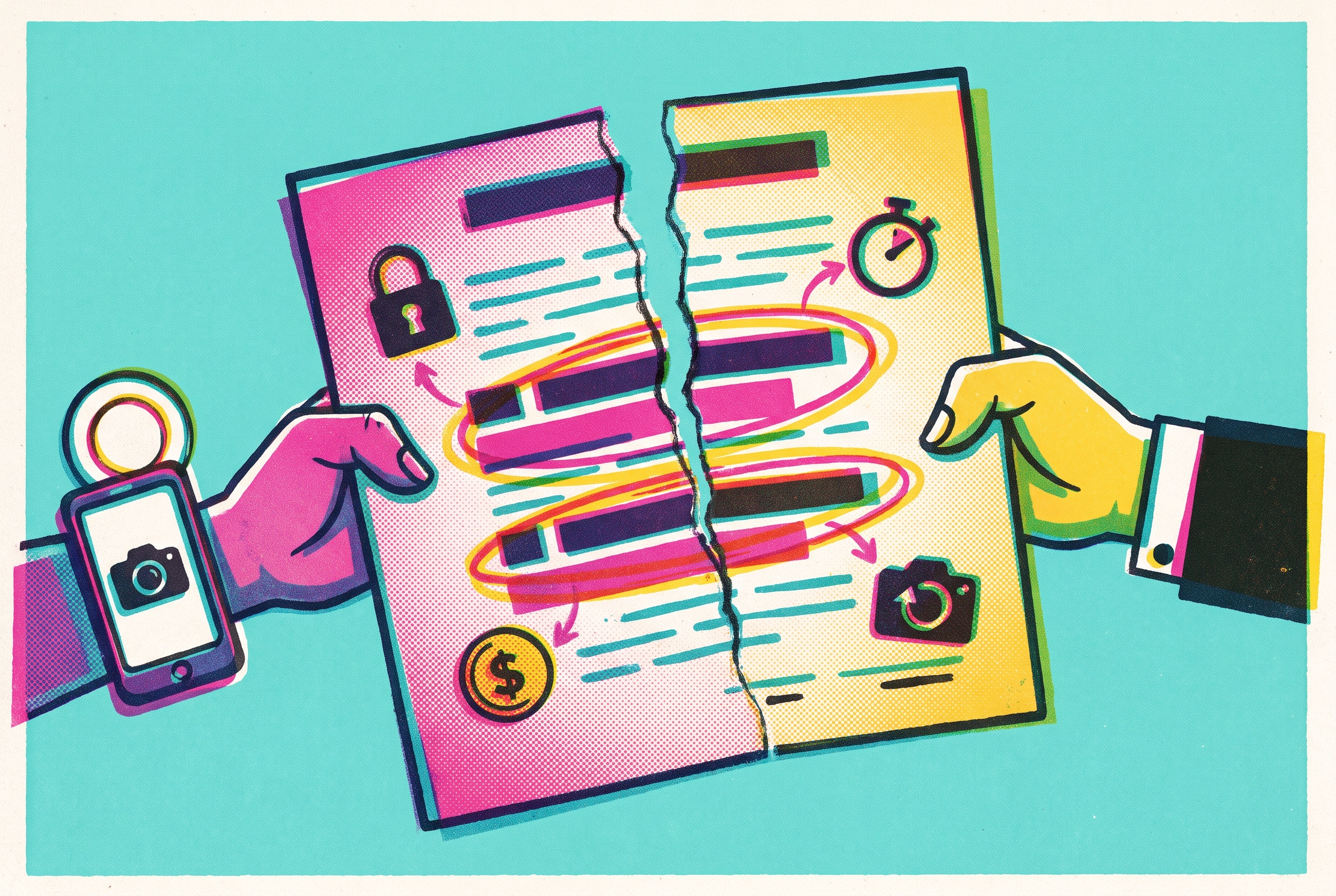
Nearly every creator-brand dispute stems from a few provisions covering usage permissions, limitations, sign-off, termination and responsibility. The dispute endures since both parties interpret vague wording as consensus on specifics that remained unresolved. Fixing it demands more than identifying the correct provision. The contract must spell out each party's permitted actions, the expiration of that authority and the consequences should the arrangement collapse.
Why a handful of clauses account for nearly every creator-brand dispute
Contracts fail when people treat them like production checklists and never sort out who holds what rights. A schedule can cover every post and still say nothing about who may reuse the content later. Whatever the contract does not grant, the creator keeps. So fights over payment, unclear rights and missed disclosure keep circling the same provisions, from usage rights and exclusivity through liability, approval and kill fees. AI likeness rights bring those fights to uses older agreements never planned for.
Using an agency inserts one more failure point. If the brand hires an agency that then hires the creator, rights still have to pass through two agreements. A deal with the brand will not cure an absent rights grant in the creator deal.
Usage rights: why duration and channel gaps produce the most expensive disputes
A licence is required to secure usage rights. Mentioning “marketing materials” never specifies placement, duration, or applicable rules. Such omissions trigger the most expensive conflicts, since arguments surface once money has changed hands and each side holds different assumptions about ongoing access versus ownership. If the licence lacks an expiry, nothing in the agreement tells the brand when it must pull its campaigns.
Build the provision on four points: the channels identified, the territory specified, the start trigger and end date for the term, and the brand’s obligations at expiry. Handle sub-licensing separately, since the outlets the brand controls are not the third-party sellers, platforms or distribution partners it uses. If that line is blurred, each party may read the licence as reaching a different group.
Paid amplification differs from organic reuse. For whitelisting, Spark Ads, and partnership ads, parties must specify the platform, duration, region, cost, and any extension fee when signing. Deferring that price pushes the negotiation toward a dispute. Even if brands treat perpetual rights as routine, creators might never have consciously agreed to such terms. Specifying and costing out perpetuity keeps the agreement moving while preventing costly unintended giveaways.
Exclusivity: why vague category definitions create the fights, and how precision removes them
Exclusivity, like usage rights, must be bounded: the brand's use of existing content in one case, and what the creator can do next in the other. “No competitor posts” signals a goal but leaves the limit itself undefined. The brand's own notion of who counts as a rival won't suffice. The clause should name a category or particular companies, with a fixed roster giving the clearest boundary and calendar dates fixing when the restriction ends.
Existing commitments need the same careful attention. Exceptions covering earlier contracts and ongoing affiliate arrangements keep a creator from making a commitment that existing obligations already violate. A creator who violates the agreement immediately gives the brand an exit option before the intended partnership can operate. The agreement should separate tasks the creator may refuse from obligations the creator is unable to reverse.
Should a deal conclude during the second month of a exclusivity period, the contract must specify whether the creator is still bound for the remaining four months. Without that provision, cancellation leaves the restriction unresolved. If a brand claims a breach, it must establish how the rival promotion violated the agreed restriction, with timestamped screenshots demonstrating that it occurred during the restricted period.
Content approval: how the revision loop becomes a liability for both sides
Brands want to review the caption, visuals, and message before publication, and they want protection if approved content is changed after posting. Creators need a defined revision loop, plus a safeguard against delays that eat up the posting window. Both concerns can arise honestly. Trouble starts when the contract grants approval power but gives no practical way to use it.
The agreement should give the brand clear approval authority, allowing it to check the content and request edits ahead of publication. It also has to put that right inside a defined process. It should spell out the included number of revision rounds, often two, and set the brand’s feedback deadline, typically within several working days. If the brand says nothing by the deadline, the clause should treat the draft as approved and allow publication in that form.
Kill fees: what each side is actually owed when a deal falls apart before the post goes live
Sign-off likewise dictates the payout should the arrangement end prematurely. Linking termination compensation to sign-off fails if the acceptance terms keep that benchmark vague, so both sections must cross-reference. Lacking defined exit fees, talent might chase court awards exceeding the contract value, while an influencer walking away deprives the sponsor of organized remedies.
Under the notes, the usual schedule requires 25% upfront, a larger amount once the draft is delivered, and full payment after the content is approved. These milestones separate an early pullout during production from one that comes after brand approval. They do not stand in for clear grounds for termination. The agreement also needs to set out both sides’ exit rights, identify triggers such as serious default, insolvency, or a regulatory injunction that allow termination at once, and explain the amounts due at each point.
Costly campaigns often justify escrow linked to milestones. Escrow can release money at brief approval, draft delivery and final publication, while still allowing a compliance hold. Both parties get security without relying on the other to make timely payment. Cancellation terms and each escrow trigger should track approvals, giving the contract a clear milestone for choosing the right payment outcome.
If the brand hires an agency that then hires the creator, rights still have to pass through two agreements.
Disclosure: why the clause no longer protects either party on its own
The FTC makes brands answer for influencers who fail to disclose, even if the agreement assigns that duty elsewhere. Because private lawsuits pose an expanding threat to each party, transparency requirements carry enormous weight in numerous deals.
The provision must therefore spell out its mechanics. It needs to set out the exact label and where it goes, such as an Ad opening the caption in the post’s own language, plus evidence the post ran, a cure period and indemnity wording. The label’s location should suit the medium carrying the endorsement. Under the FTC’s 2023 updated Endorsement Guides, clear disclosure is required, tailored to each platform: Instagram Stories must be visible without clicking, TikTok videos must carry spoken or on-screen notice, and YouTube must disclose in the video itself and the description.
A disclosure may be present yet remain hidden from view. Where the Hashtag is placed, a hidden "more" section or inconsistent platform labeling can result in a violation the brand enforces against the creator. Prior to any demand letter, compile comprehensive disclosure documentation including screenshots as evidence. The brand can enforce that contract right independently of its own regulatory exposure, and holding the creator liable does not replace the company's compliance responsibility.
Morals clauses and one-sided indemnity: the brand-safety provisions that backfire when drafted badly
This obligation-versus-liability divide, once again, matters just as much for brand-safety provisions more generally. Morals provisions and indemnity language serve valid protective purposes, yet sweeping, lopsided phrasing can plant the seeds of the next dispute. An "Anything Brand dislikes" trigger effectively lets the brand walk away at will, with no termination payment, quietly nullifying the deal's cancellation timetable.
To function well, a morals provision must specify narrow triggers, operate reciprocally and address the fate of previously remitted compensation. Examples include criminal accusations, verified offensive social media posts or reputational harm to a brand from public backlash. Both the behavior in question and the resulting contractual outcome must be clearly defined. Such mutual protections are essential since an influencer's reputation may be damaged by ties to a company embroiled in controversy, bankruptcy or legal scrutiny. Influencers equally deserve a contractual way out.
Balance deserves equal focus in indemnity. "Creator indemnifies brand against all claims" leaves the creator exposed without reciprocal safeguards where the brand bears responsibility. Read alongside the disclosure, termination and fee clauses, it should apportion responsibility instead of masking a one-sided cancellation right or attempting to eliminate liability that outlives the contract.
AI likeness rights: the clause most existing contracts do not address and courts have not fully settled
AI likeness rights reopen the fight over how far the licence runs. Older clauses are now being invoked to let companies train models on likeness material and approve synthetic versions of the same person. These are not just more distribution channels. They cover exploitation the creator might not have valued in advance, which makes broad likeness language an especially sharp point of conflict.
Miranda Mendelson, a beauty creator, rejected a hair care partnership when she discovered the platform's contract would let them upload her content "into any AI generative tools and for any AI usage" forever. The platform refused to remove the clause.
California AB 2602 governs performances newly fixed from January 1, 2025 onward, regulating this language under particular conditions. Such clauses become void if a digital replica substitutes for live performance, if the agreement omits a detailed account of intended uses, or if the person had no lawyer or union representative. AI likeness agreements remain permissible under this law.
The wider legal position is still unsettled. If the status of AI replica rights is unclear, courts and counterparties increasingly tend to read the clause against the drafting company and in favour of the creator. Better-placed creators now push for licences that expire, sign-off on every likeness-based AI result and revenue participation measured by usage. A developing “kill switch” clause lets them cut off AI permissions during the contract if the technology is used beyond the agreed limits. It repurposes standard contract-termination logic for this newer category of rights use.
Jurisdiction and regulatory divergence: why a clause that works in one market fails in another
A contract that meets US federal requirements can still fail compliance or enforcement across the EU, UK, or certain US states. That makes Jurisdiction a key drafting decision. California, for instance, has AI likeness rules that operate independently of FTC obligations, meaning federal disclosure compliance alone cannot guarantee that a digital replica provision is legally sound.
Under France’s 2025-1137 decree, deals above a set threshold require a signed agreement listing each party’s name, postal address, email, and tax residence country. Separate transparency requirements introduce another dimension. Both the UK ASA and the Dutch Reclamecode, updated as of 1 July 2026, hold advertisers and influencers jointly accountable regardless of any private agreement. The ASA typically views brands as sharing liability whenever promotional links or discount codes are used. Any disclosure provision must therefore acknowledge the advertiser’s ongoing liability instead of suggesting that delegating the duty settles it.
Cross-border deals also need explicit terms. Specify the governing law and jurisdiction instead of leaving them to conflict-of-laws rules, and state the time zone applicable to deadlines for parties in different countries. These choices establish the framework for all remaining clauses. Across markets, these clauses recur, yet what they must include differs by jurisdiction. First, identify the disputed clause. Then, determine its mandatory content under the applicable market’s law.
Notes
- Brand Influencer Contract Breach Demand Letters
Informed the points on documenting breaches with timestamped screenshots, disclosure evidence before a demand letter, and how exclusivity and disclosure breaches are proven.
- The Hidden Contract Trap in Creator Brand Deals - Odin Law and Media
Supplied the agency-chain point that rights must pass through two agreements and a brand deal cannot cure a missing grant in the creator deal.